Vision
Vision
When the Thing That Disappears Is the Thing That Decides

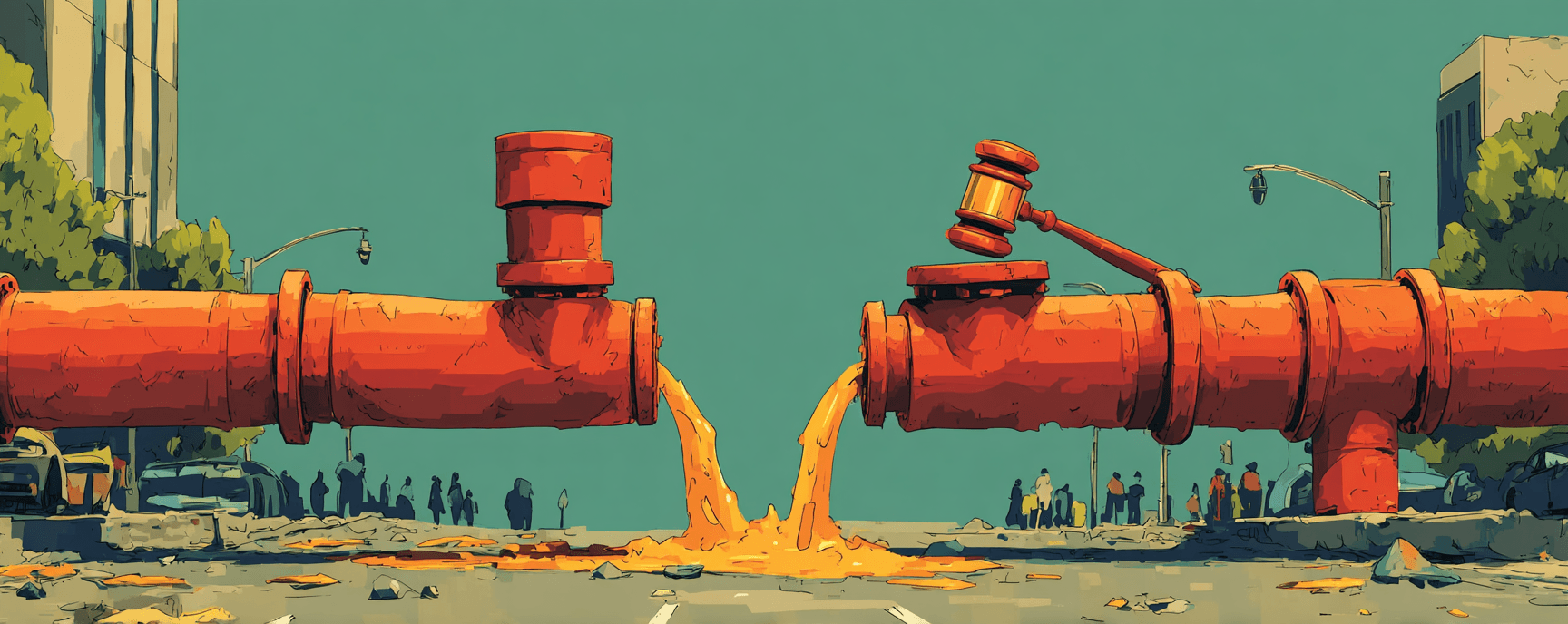
Right now, AI agents have names. They get launched at keynotes with brand identities, marketed as teammates you can @mention in a project tracker. Underneath the fanfare, interoperability protocols are moving into standards-body governance, on track to ship by year's end. The agents are being made ready to disappear.
Every successful technology eventually does. Electricity did. Email did. HTTPS did. Those technologies carried things. Power, data, packets. They were conduits, and when a conduit fails, you know. When the thing sliding toward invisibility is the thing making the decisions, the failure looks completely different. There is one precedent worth studying closely.
When the Thing That Disappears Is the Thing That Decides
Right now, AI agents have names. They get launched at keynotes with brand identities, marketed as teammates you can @mention in a project tracker. Underneath the fanfare, interoperability protocols are moving into standards-body governance, on track to ship by year's end. The agents are being made ready to disappear.
Every successful technology eventually does. Electricity did. Email did. HTTPS did. Those technologies carried things. Power, data, packets. They were conduits, and when a conduit fails, you know. When the thing sliding toward invisibility is the thing making the decisions, the failure looks completely different. There is one precedent worth studying closely.
Two Tensions

The 600 Agents Nobody Hired
The most valuable AI agents in enterprise today are background processes running on event triggers across supply chains, compliance pipelines, and procurement systems, operating continuously without human prompts. A security vendor recently mentioned that a Fortune 500 client found hundreds of these agents running inside its environment that nobody knew existed. The audience didn't flinch. That indifference is the governance problem.

How Do You Sell Something That Succeeds by Vanishing?
The most valuable AI agents succeed by disappearing, which creates a governance problem explored in our companion piece. It also creates a commercial one. Atlassian's design docs for Rovo instruct teams to make AI visible so users trust it. The product aspiration is that nobody thinks about Rovo at all. Somewhere between those two instructions lives an unanswered question about how you price, brand, and renew software whose success metric is user indifference.
The Timeline

Electricity took roughly 40 years to go from novelty to something city dwellers forgot they lived without. The web compressed that to about 20. Mobile did it in eight.
Each wave follows recognizable markers: protocol standardization, governance handoff to neutral bodies, developer ecosystem consolidation, then invisibility. Agents are hitting these markers faster than any predecessor. MCP and A2A both moved from single-vendor control to Linux Foundation governance in under 12 months. The web took a decade to make that same move.
If the compression pattern holds, a three-to-five-year infrastructure arc is plausible. Worth asking: what does that actually feel like from the inside?
Further Reading