

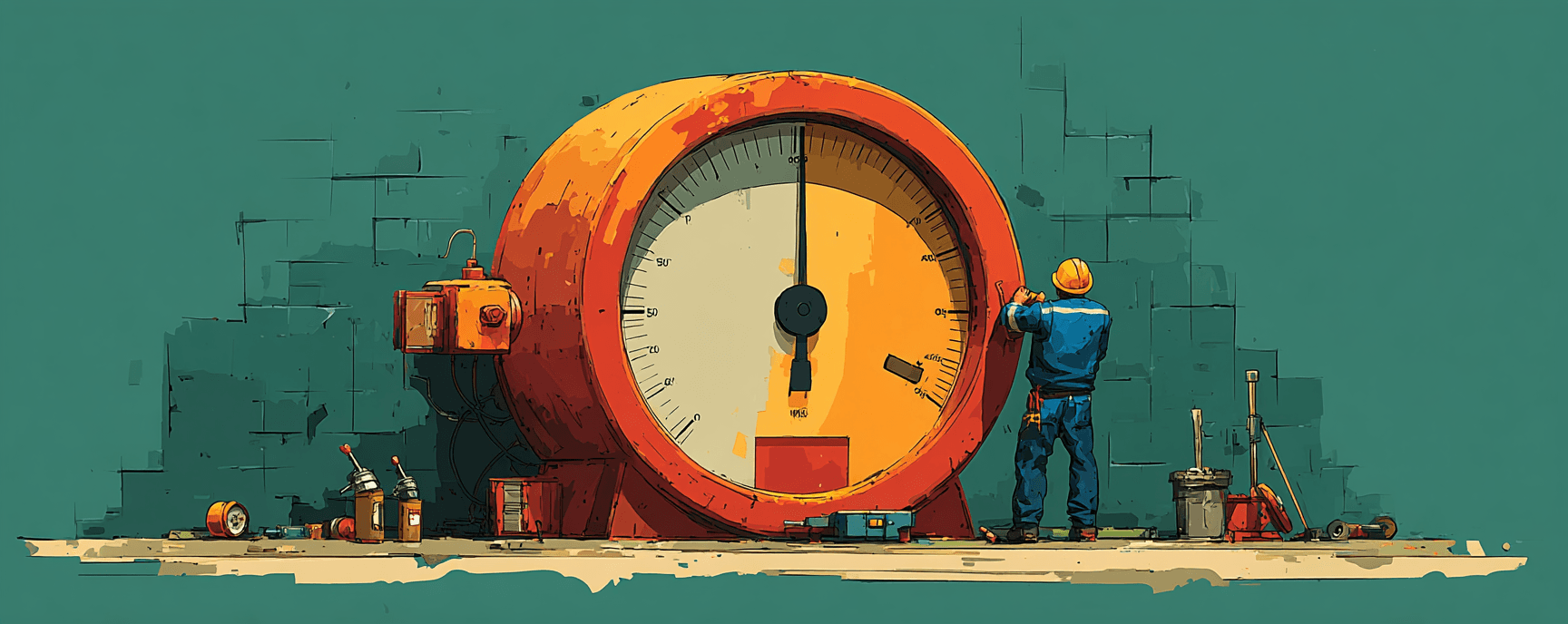
Every Monday morning, a pricing analyst at a travel marketplace opens a spreadsheet containing 150 randomly selected hotel rates. Her job: verify that automated extraction matches what's actually on the hotel websites. She's been doing this for six months. The sample size has dropped from 300 properties to 150—but it will never reach zero.
This is confidence calibration at scale. Teams running web automation build trust through specific protocols: sample validation that starts with intensive spot-checking during initial deployment and gradually decreases as systems prove reliable. The percentage adjusts, but perpetual spot-checking remains. That's the operational reality. Trust requires continuous calibration.
Web automation faces particular complexity. Sites change structure without warning. Authentication breaks when providers update their systems. Regional variations mean the same hotel chain displays different data across markets. A/B tests cause accuracy to fluctuate week-to-week as sites experiment with layouts. Building web agent infrastructure at scale, we see teams establish error thresholds that trigger reversion: high accuracy requirements for critical feeds like pricing data, with automated monitoring tracking extraction success in real time. When accuracy drops below threshold, systems revert to manual processes or alert operators.
Too high and you're constantly reverting to manual work. Too low and you're trusting corrupted data that flows into repricing algorithms or strategic dashboards.
The threshold itself becomes an operational artifact. Teams calibrate based on downstream impact: automated repricing requires higher accuracy because errors compound in production. Competitive intelligence for weekly strategy reviews can tolerate lower thresholds because humans review before decisions.
Across deployments, certain patterns emerge consistently:
- Gradual rollout: Small site counts validated before expanding to larger deployments
- Staged confidence building: Human review → spot-check validation → automated monitoring → trusted feed
- Explicit reversion protocols: What triggers return to manual, who gets alerted, how quickly systems roll back
Data flows into dashboards, reports generate automatically. The calibration infrastructure stays hidden: sample validation protocols, monitoring systems tracking accuracy, human oversight that never fully disappears, reversion triggers that activate when confidence drops.
Without confidence calibration, systems break in predictable ways. Automated repricing runs on corrupted competitor data. Strategic decisions rely on incomplete intelligence when site structure changes go undetected. Error handling and data cleaning consumes $15,000 annually in manual effort when validation infrastructure doesn't catch problems early.
With proper calibration, decision velocity increases because data becomes dependable infrastructure. Analyst time shifts from perpetual verification to strategic synthesis. Teams treat data as dependable infrastructure, using reliable information at speed.
Trust at scale operates through continuously calibrated thresholds maintained by specific practices. Sample validation rates that adjust over time. Error thresholds that trigger reversion. Staged rollouts that expand gradually. Monitoring systems that track accuracy in real time. Teams who understand this build confidence calibration into operations from day one:
- Allocate time for sample validation
- Establish error thresholds before deployment
- Create reversion protocols for when accuracy drops
The calibration work never stops. It just becomes part of how reliable automation actually operates.
Things to follow up on...
-
Maintenance overhead compounds: Engineers spend an average of 5 hours per week reacting to website changes and fixing scrapers, adding $20,000 per year in overtime or overhead beyond base infrastructure costs.
-
Underutilization despite investment: While 73% of businesses increased automation spending, 61% admit their automation tools remain underutilized due to fragmented strategies and siloed implementation.
-
Human oversight requires design: The goal of human-in-the-loop systems isn't to slow processes down but to apply human oversight where it's most impactful—overuse creates workflow bottlenecks and increases operational overhead.
-
Validation infrastructure at scale: Without observability, large-scale scraping means flying blind—teams need structured logging, metric dashboards, and alert systems that track crawler health, latency, and extraction accuracy in real time.