

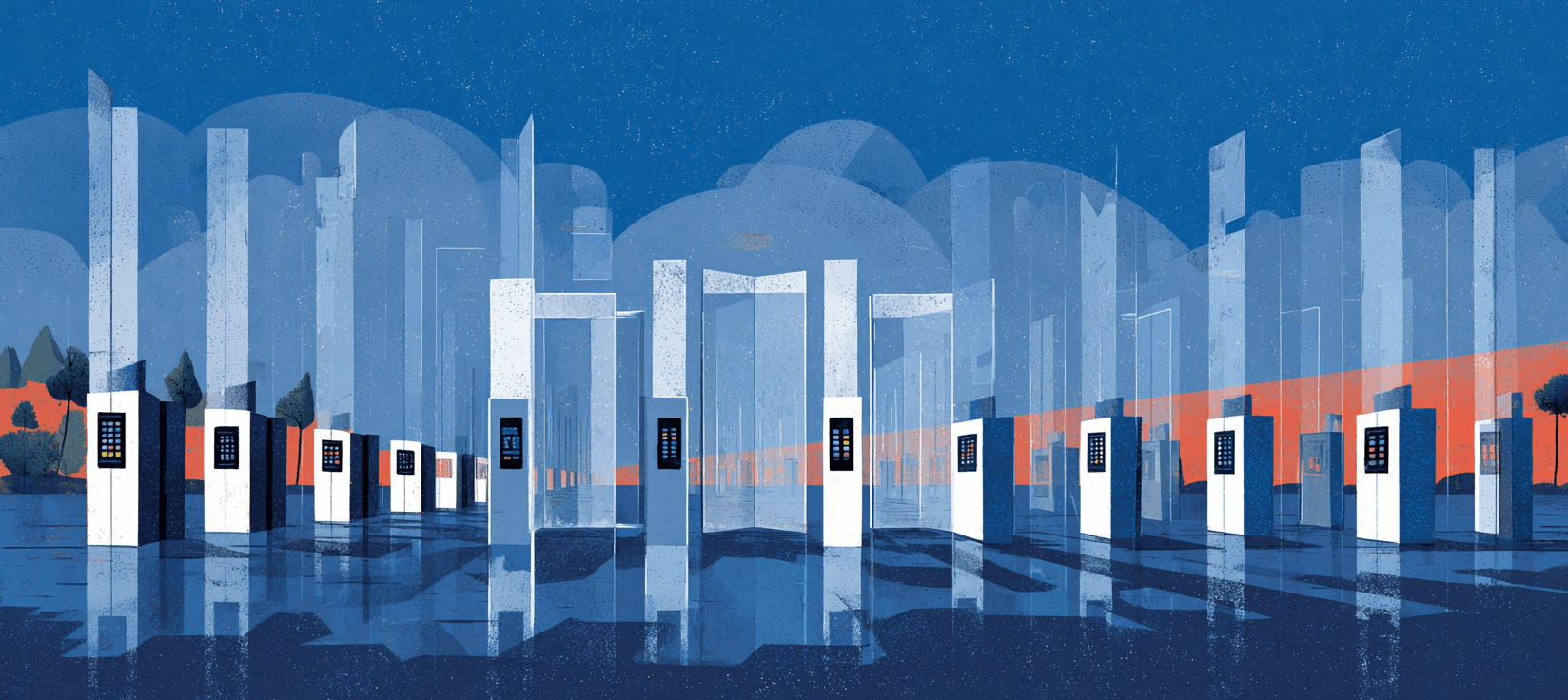
The web remains architecturally transparent. Every response arrives as readable HTML. Browser developer tools expose network calls, DOM structure, JavaScript execution. The fundamental design hasn't changed since the 1990s: you can see exactly how any website works.
Yet building reliable web automation has never required more sophisticated infrastructure to navigate this transparency.
The founding philosophy of radical openness created an unexpected economic tension. When the web's designers chose transparency as a core principle, they built a system where visibility would eventually become a liability. The ability to act on that visibility would become a capital requirement determining who gets to participate.
The web's transparency remained universal, but the ability to act on that transparency became concentrated among those who could afford the defensive infrastructure.
The Openness Assumption
In 1991, when Tim Berners-Lee released the first web browser, he included "View Source" as a core feature. The reasoning was straightforward: the web should be a space where anyone could learn by examining how things worked. HTML was meant to be human-readable. HTTP was designed to be inspectable. The architecture assumed that transparency served everyone's interests.
This assumption held through the web's early years. Transparency enabled innovation. Developers learned by viewing source. Search engines indexed content by reading HTML. The web's growth depended on this openness.
The relationship inverted as e-commerce emerged and advertising revenue grew. The same transparency that enabled discovery now enabled competitive intelligence, price monitoring, inventory tracking. Websites still needed to be transparent enough for search engines and browsers, but they wanted to be opaque enough to prevent systematic data extraction.
The architectural openness remained. The operational hostility began.
The Defensive Accumulation
Websites couldn't abandon the transparent architecture without breaking compatibility with browsers and search engines. So they added layers of operational complexity on top: bot detection systems analyzing behavioral patterns, dynamic content loading requiring JavaScript execution, session management tracking interaction sequences, CAPTCHA challenges testing for human presence.
The defenses aren't universal. Sites still need search engines to index them, accessibility tools to read them, legitimate partners to integrate with them. The operational challenge became distinguishing wanted automation from unwanted extraction, creating an environment where defensive systems try to identify intent from behavioral patterns.
The HTML still arrives readable. The network calls remain visible. But accessing this transparent architecture reliably now requires infrastructure sophisticated enough to navigate the defensive layers built on top of it.
We see this daily building web agents. The technical challenge isn't parsing HTML—that's commoditized. The operational challenge is maintaining reliability when websites treat systematic access as adversarial by default, even though their architecture remains open by design.
You need monitoring systems that detect when defensive patterns change. You need proxy infrastructure that maintains sessions across thousands of endpoints. You need behavioral modeling that passes detection systems.
The Economic Stratification
This infrastructure barrier fundamentally changed who could build on web data. In the early web, a developer with basic HTML knowledge could create a price comparison tool or travel aggregator. By the 2010s, the same functionality required proxy networks, anti-detection systems, and operational monitoring. Capital requirements that determined market entry.
The numbers tell the story:
| Economic Indicator | Impact |
|---|---|
| Enterprise data budgets allocated to public web data | 42% |
| Enterprises planning to increase web data spending | 94% |
| Vendor R&D spent on evasion techniques | Up to 30% |
| Large enterprises as share of web scraping tool usage | 60-70% |
These vendors spend R&D budgets developing evasion techniques: simulated mouse movements, randomized delays, rotating IP addresses. Many SMEs find comprehensive strategies prohibitively expensive.
The web's transparency remained universal. The ability to act on that transparency became concentrated among those who could afford the defensive infrastructure. The founding principle of radical openness created conditions for its opposite—not through architectural restriction, but through operational complexity that requires capital to navigate.
The Persistent Tension
Founding principles don't disappear. They get buried under operational reality.
The web's architecture still reflects 1990s idealism about transparency and learning. But decades of commercial tension created an operational environment where that transparency is simultaneously universal and practically inaccessible without significant infrastructure investment.
The tension between architectural transparency and operational defensiveness will shape web automation as long as the architecture remains open and the stakes remain high. Understanding this history explains why reliable web automation became an infrastructure problem rather than a technical one—and why that distinction determines who can build on the web's transparent foundation.
Things to follow up on...
-
The proxy price war: Between May 2023 and March 2024, at least seven major proxy providers slashed prices by 10-80%, fundamentally changing the economics of web automation infrastructure.
-
CAPTCHA solving commoditization: The average cost of breaking reCAPTCHA has remained below $1 per 1,000 solves since 2016, revealing how defensive mechanisms become economic rather than technical barriers.
-
Anti-detect framework evolution: Modern tools like nodriver represent a fundamental shift from patching browser APIs to avoiding automation protocols entirely, changing how evasion infrastructure works at the protocol level.
-
Bot detection market growth: The bot security market is projected to grow from $667.68 million in 2024 to $2.55 billion by 2033, showing how defensive spending scales alongside automation attempts.