Practitioner's Corner
Practitioner's Corner
When Translation Becomes Infrastructure
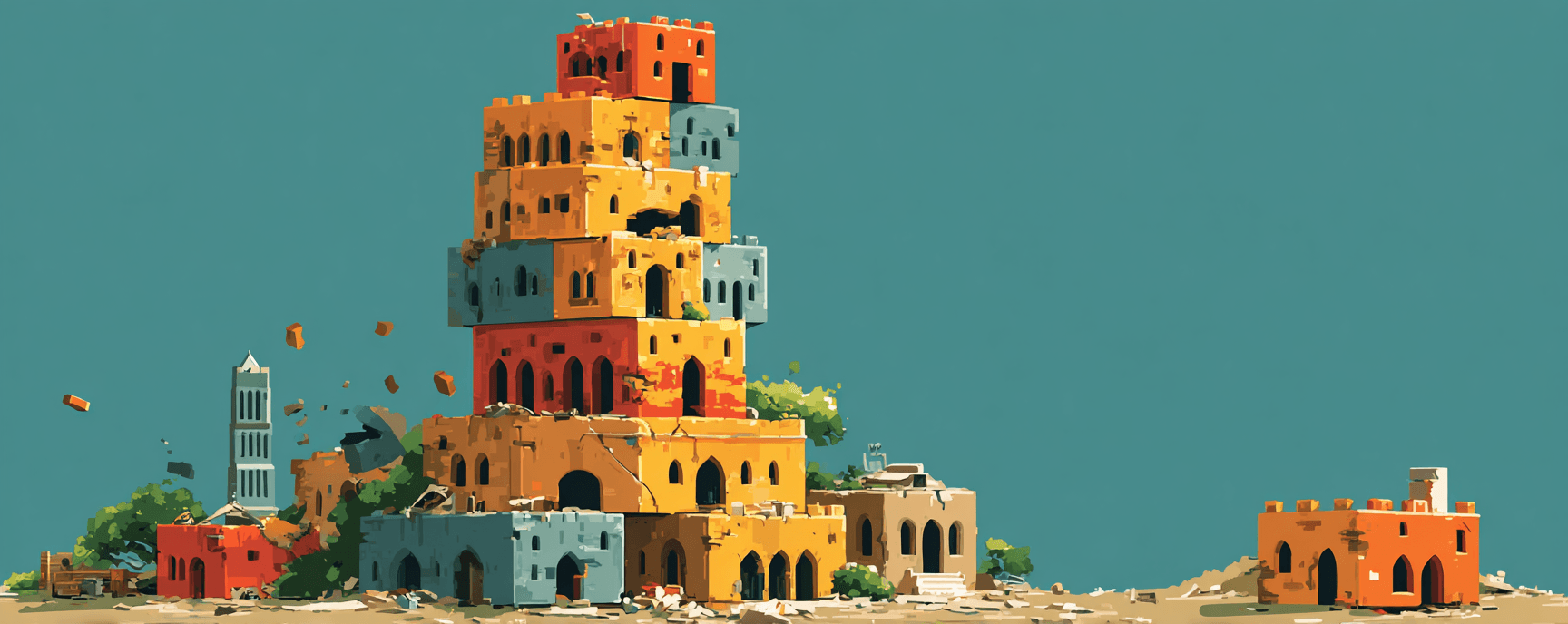
United Nations translators don't eliminate language barriers—they make collaboration possible despite them. Enterprise systems encounter the same constraint: 71% of applications remain unintegrated because forcing conformity means rewriting what can't be rewritten. Legacy databases from 1997. Cloud platforms with REST APIs. Proprietary systems that won't conform. Traditional integration tried to make these speak the same language. The complexity lives in how we're trying to connect them.
When Translation Becomes Infrastructure
United Nations translators don't eliminate language barriers—they make collaboration possible despite them. Enterprise systems encounter the same constraint: 71% of applications remain unintegrated because forcing conformity means rewriting what can't be rewritten. Legacy databases from 1997. Cloud platforms with REST APIs. Proprietary systems that won't conform. Traditional integration tried to make these speak the same language. The complexity lives in how we're trying to connect them.
The Protocol Engineer Who Assumes Everything Disappears
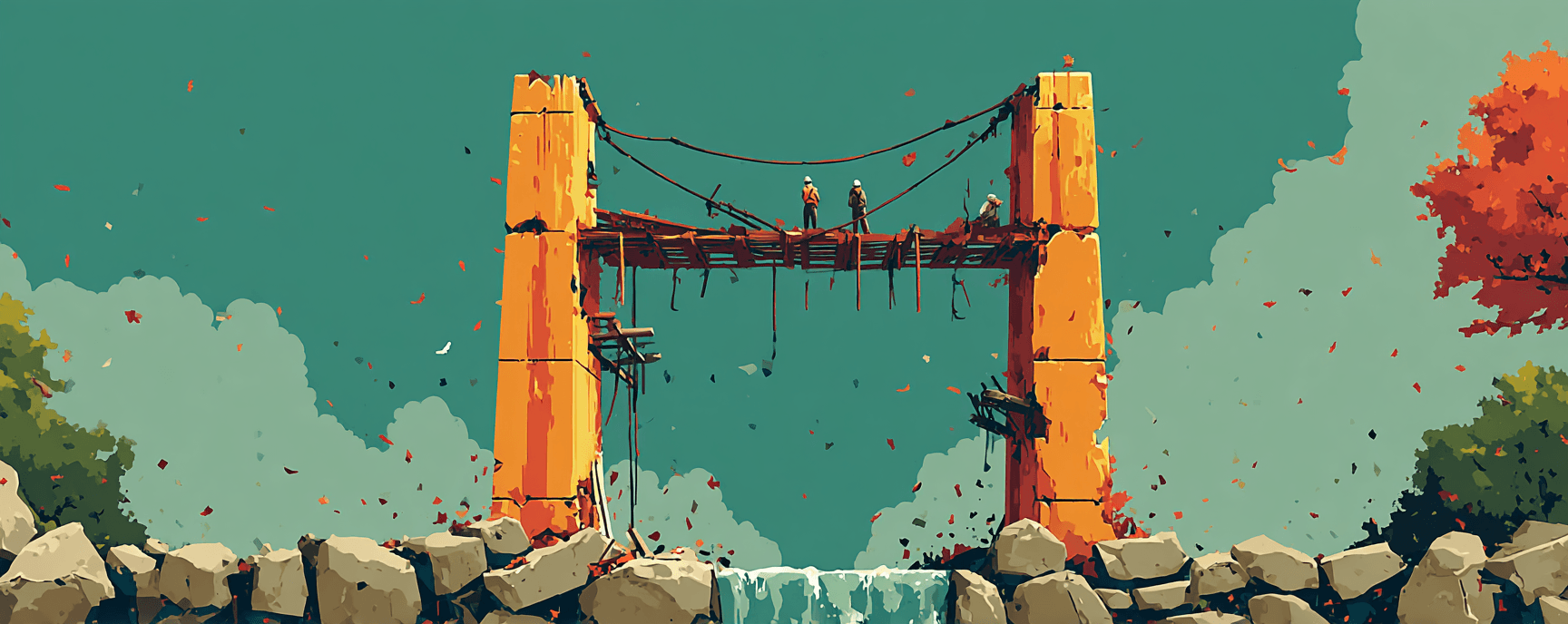
An agent delegates a task to another system and waits for a response that might never come. The network didn't fail. The server didn't crash. The receiving agent might still be working. It might have finished hours ago but can't reach the original requester. It might have disappeared entirely, leaving no trace of whether the work ever started.
Todd Segal designs protocols for this reality. Agent workflows involve human review, external dependencies, research that stretches across hours or days while systems restart, connections drop, and participants vanish. Coordination when disappearance is the default case requires rethinking what reliability means.
The Protocol Engineer Who Assumes Everything Disappears
An agent delegates a task to another system and waits for a response that might never come. The network didn't fail. The server didn't crash. The receiving agent might still be working. It might have finished hours ago but can't reach the original requester. It might have disappeared entirely, leaving no trace of whether the work ever started.
Todd Segal designs protocols for this reality. Agent workflows involve human review, external dependencies, research that stretches across hours or days while systems restart, connections drop, and participants vanish. Coordination when disappearance is the default case requires rethinking what reliability means.
Standards Movement

The Linux Foundation launched its Agentic AI Foundation on December 9, 2025. Platinum members include AWS, Anthropic, Google, Microsoft, and OpenAI, who contributed three foundational projects: Anthropic's Model Context Protocol, Block's goose framework, and OpenAI's AGENTS.md convention.
MCP reached 10,000 published servers and 97 million monthly SDK downloads by December 2025. OpenAI adopted it in March, Google DeepMind in April. Google's Agent2Agent protocol, announced April 2025 and donated to the Linux Foundation in June, released version 0.3 in July with support from over 150 organizations.
Security researchers identified multiple MCP vulnerabilities in April 2025, including prompt injection and tool permission issues. The IETF established agent-to-agent coordination infrastructure, though formal working groups remain unformed.
Protocol Deep Dives