Echoes

Echoes
The Round Trip

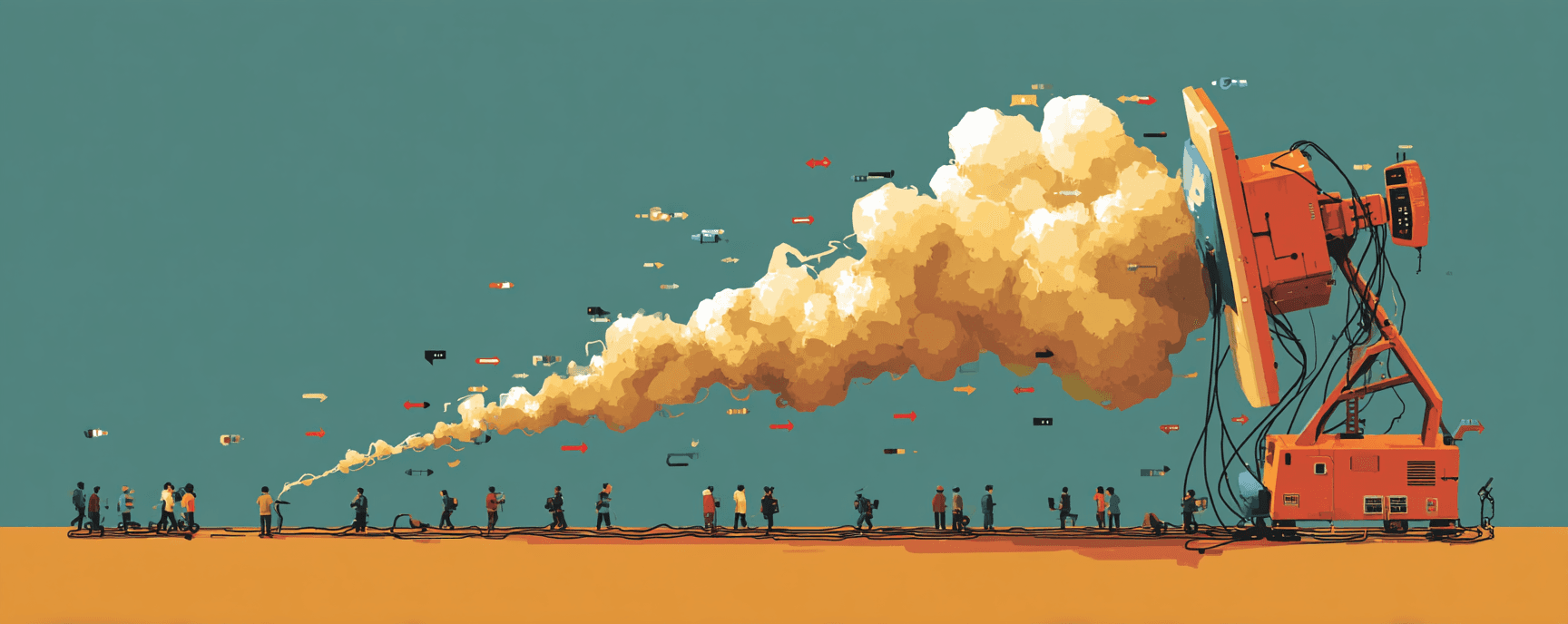
Unplug a 1984 Macintosh from the wall, carry it to another room, plug it back in. Everything still there. The operating system, the graphics, the document you were editing. No connection to maintain. Now try the same experiment with the machine on your desk today. Try the network cable.
Apple turned fifty this month. The company's origin story gets retold every decade, but the architectural proposition it carried deserves a different kind of attention. Where computation actually lives has shifted quietly, and the pattern it's settling into rhymes with something the personal computer was supposed to have put to rest.
The Round Trip
Unplug a 1984 Macintosh from the wall, carry it to another room, plug it back in. Everything still there. The operating system, the graphics, the document you were editing. No connection to maintain. Now try the same experiment with the machine on your desk today. Try the network cable.
Apple turned fifty this month. The company's origin story gets retold every decade, but the architectural proposition it carried deserves a different kind of attention. Where computation actually lives has shifted quietly, and the pattern it's settling into rhymes with something the personal computer was supposed to have put to rest.
Reaching Backward

Functional Bondi Blue iMacs have been climbing resale listings all year. Original Macintosh 128Ks too. The buyers skew young. Vinyl outsold CDs for a third straight year, "retro tech" content crossed 8 billion views, and searches for "analog hobbies" jumped 136% in six months. None of this is nostalgia, exactly. You can't be nostalgic for 1998 if you were born in 2003.
Jony Ive designed the Bondi Blue by asking what objects convey warmth. His team landed on candy dispensers. The machine was a deliberate rejection of beige corporate computing. Now people are reaching for it as a rejection of something else entirely. A computer that does less, weighs more, and belongs completely to you.

Gerry Tuckwell on Spending $1,298 to Watch Uppercase Letters on a Television
CONTINUE READINGStill Running / Edge Cases

The Load-Bearing Layer Nobody Talks About
The mainframe was supposed to be gone by now. Stewart Alsop gave it until 1996. The client-server era, the PC era, the cloud era all arrived on schedule, each promising to replace what came before. None did. Seventy-eight percent of enterprises still depend on mainframe infrastructure for revenue. Their persistence says something uncomfortable about the $600 billion in AI cloud infrastructure being built right now.

Where Will the Thinking Actually Happen?
A flagship phone in 2026 can run a 4-billion-parameter AI model locally. NPUs are shipping in every laptop. The pitch is familiar: intelligence moves to the edge, away from the center. PCs were supposed to do this to mainframes. Mobile was supposed to do it to desktops. Now on-device AI is supposed to do it to the cloud. The economics are real. So is the pattern of what happens next.
The Longer Thread