Foundations
Conceptual clarity earned from building at scale
Foundations
Conceptual clarity earned from building at scale

Browser Automation vs. Web Agents

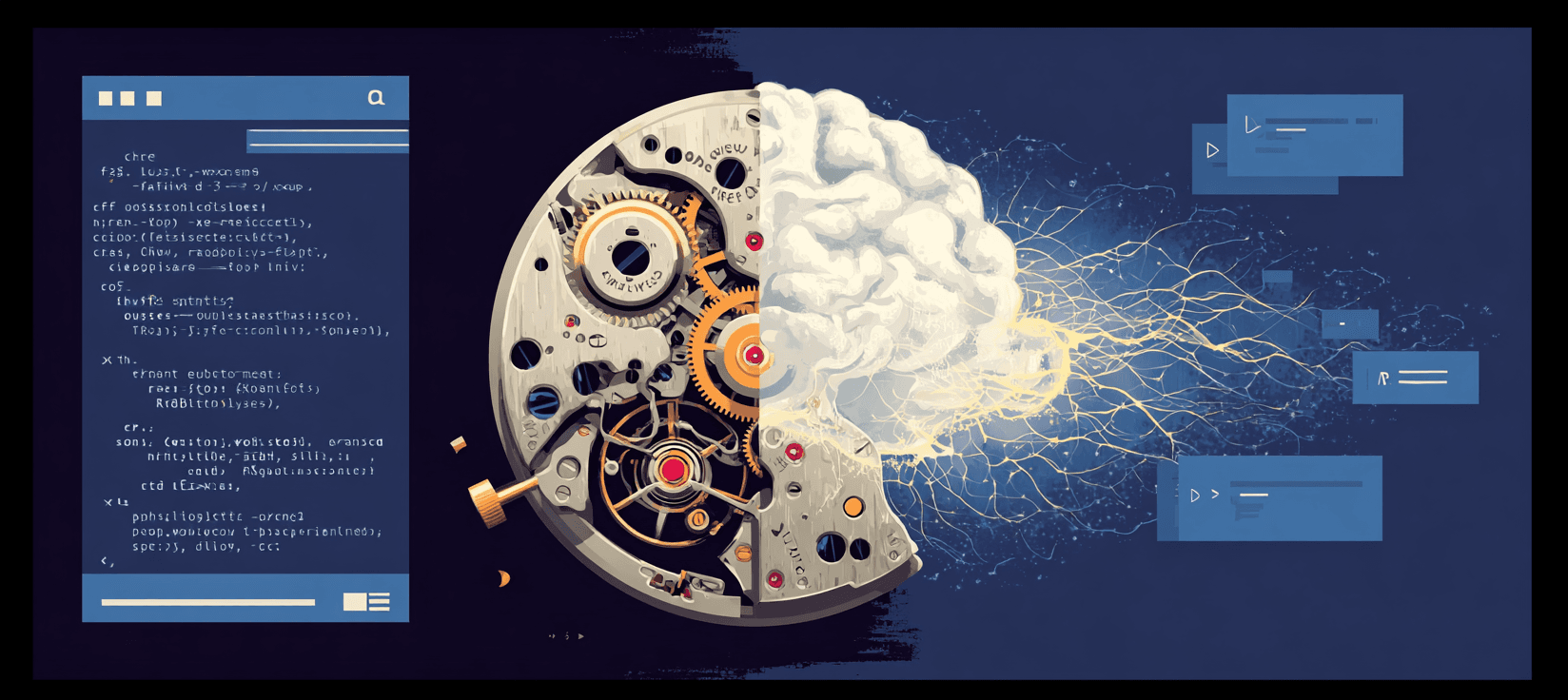
A practitioner watches months of working Puppeteer scripts shatter overnight when a website redesigns. Selectors break. The workflow dies. Teams keep making the same mistake: treating browser automation and web agents as interchangeable tools for the same job. At scale, that confusion creates systems that fail in ways you didn't anticipate, or costs that compound when volume hits. The difference isn't just technical. It determines whether your automation survives production.
Browser Automation vs. Web Agents

A practitioner watches months of working Puppeteer scripts shatter overnight when a website redesigns. Selectors break. The workflow dies. Teams keep making the same mistake: treating browser automation and web agents as interchangeable tools for the same job. At scale, that confusion creates systems that fail in ways you didn't anticipate, or costs that compound when volume hits. The difference isn't just technical. It determines whether your automation survives production.

Tools & Techniques

When Frameworks Handle Timing for You
Every web automation framework decides who handles timing ambiguity: the tool or the operator. Playwright chose automatic. Click a button and the framework waits for it to become interactive without manual coordination. Less control, simpler operations. When you're maintaining automation across dozens of sites with varying loading patterns, that choice determines whether you're fixing broken waits or building new capabilities. Abstraction overhead versus maintenance burden—which cost matters more depends on what you're trying to operate.

When Explicit Control Reduces Overhead
Puppeteer exchanges 11KB of WebSocket messages with Chrome to complete a task. Playwright needs 326KB for the same operation. That 30x difference comes from architectural choices: direct protocol access versus cross-browser compatibility layers. When your content loads predictably and Chrome is your only target, you're paying overhead for capabilities you don't need. Puppeteer gives you protocol-level control and native speed. For teams running high-volume automation against stable sites, explicit coordination beats automatic handling—if your production context rewards precision over convenience.

When Frameworks Handle Timing for You
Every web automation framework decides who handles timing ambiguity: the tool or the operator. Playwright chose automatic. Click a button and the framework waits for it to become interactive without manual coordination. Less control, simpler operations. When you're maintaining automation across dozens of sites with varying loading patterns, that choice determines whether you're fixing broken waits or building new capabilities. Abstraction overhead versus maintenance burden—which cost matters more depends on what you're trying to operate.

When Explicit Control Reduces Overhead
Puppeteer exchanges 11KB of WebSocket messages with Chrome to complete a task. Playwright needs 326KB for the same operation. That 30x difference comes from architectural choices: direct protocol access versus cross-browser compatibility layers. When your content loads predictably and Chrome is your only target, you're paying overhead for capabilities you don't need. Puppeteer gives you protocol-level control and native speed. For teams running high-volume automation against stable sites, explicit coordination beats automatic handling—if your production context rewards precision over convenience.

When Frameworks Handle Timing for You
Every web automation framework decides who handles timing ambiguity: the tool or the operator. Playwright chose automatic. Click a button and the framework waits for it to become interactive without manual coordination. Less control, simpler operations. When you're maintaining automation across dozens of sites with varying loading patterns, that choice determines whether you're fixing broken waits or building new capabilities. Abstraction overhead versus maintenance burden—which cost matters more depends on what you're trying to operate.

When Explicit Control Reduces Overhead
Puppeteer exchanges 11KB of WebSocket messages with Chrome to complete a task. Playwright needs 326KB for the same operation. That 30x difference comes from architectural choices: direct protocol access versus cross-browser compatibility layers. When your content loads predictably and Chrome is your only target, you're paying overhead for capabilities you don't need. Puppeteer gives you protocol-level control and native speed. For teams running high-volume automation against stable sites, explicit coordination beats automatic handling—if your production context rewards precision over convenience.

A Conversation with Semantic Sam, the Web's Quiet Revolutionary

Pattern Recognition
Between October and early December, Microsoft unified AutoGen and Semantic Kernel. OpenAI launched AgentKit with visual workflow builders. Google released ADK at Cloud NEXT. AWS announced AgentCore hit 2 million downloads in five months. Adopt AI shipped their framework too.
Watch what they're all building: MCP support, agent-to-agent communication, visual orchestration tools. The features are nearly identical because the goal is identical. Control the orchestration layer, control the enterprise AI stack.
This is a land grab. The vendors see what's coming. Multi-agent systems need coordination infrastructure, and whoever provides that infrastructure becomes the platform everyone else builds on top of. We've seen this movie before with integration platforms and customer data platforms. Orchestration is the new battleground.

Between October and early December, Microsoft unified AutoGen and Semantic Kernel. OpenAI launched AgentKit with visual workflow builders. Google released ADK at Cloud NEXT. AWS announced AgentCore hit 2 million downloads in five months. Adopt AI shipped their framework too.
Watch what they're all building: MCP support, agent-to-agent communication, visual orchestration tools. The features are nearly identical because the goal is identical. Control the orchestration layer, control the enterprise AI stack.
This is a land grab. The vendors see what's coming. Multi-agent systems need coordination infrastructure, and whoever provides that infrastructure becomes the platform everyone else builds on top of. We've seen this movie before with integration platforms and customer data platforms. Orchestration is the new battleground.
Five major vendors shipped open-source agent frameworks within eight weeks, converging on identical orchestration features despite different starting points.
Microsoft merged two frameworks, OpenAI added visual builders, Google launched at their cloud conference, AWS hit 2M downloads, all supporting MCP.
Orchestration layer control means platform control—whoever coordinates multi-agent systems becomes the infrastructure everyone builds on top of.
Rapid feature convergence signals competitive standardization race, not organic evolution—vendors are positioning for ecosystem dominance, not solving user problems.
Evaluate frameworks on open standards support and vendor lock-in risk, not current feature completeness—today's capabilities matter less than tomorrow's flexibility.
Questions Worth Asking
The questions you ask before deployment reveal how much production experience you actually have. Beginners obsess over features and capabilities. People who've been paged at 2 AM ask different things: What breaks under real load? Who monitors this when it ships? Does staging actually resemble production?
We've learned these questions by building systems that had to survive contact with users. Not theory. Operational reality. Here are six that cut through vendor promises to what actually predicts success when you ship.
The questions you ask before deployment reveal how much production experience you actually have. Beginners obsess over features and capabilities. People who've been paged at 2 AM ask different things: What breaks under real load? Who monitors this when it ships? Does staging actually resemble production?
We've learned these questions by building systems that had to survive contact with users. Not theory. Operational reality. Here are six that cut through vendor promises to what actually predicts success when you ship.