

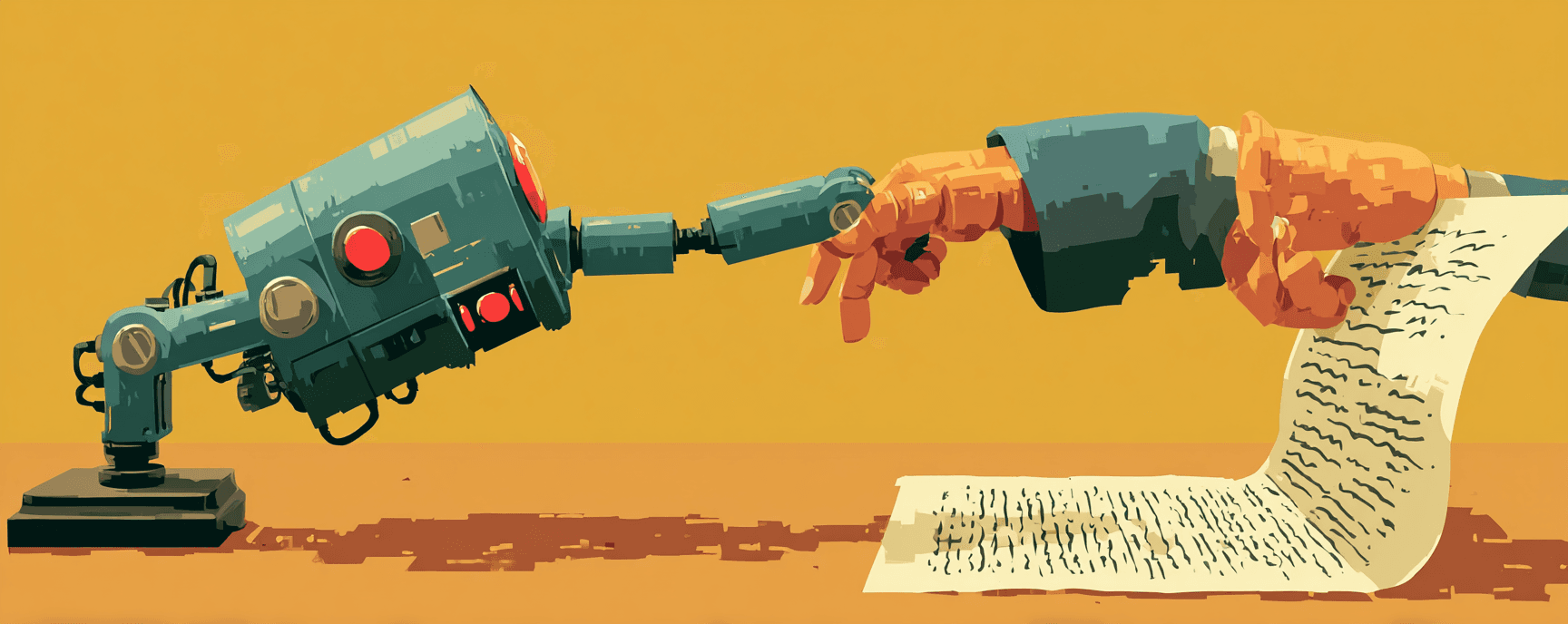
Chrome pauses. Your AI agent wants to access your banking portal. Approve or deny?
In that moment, you're not just evaluating a single action. You're evaluating whether you understand what the agent will do with that access, whether you can audit what happens next, whether you know how to respond if something goes wrong. That pause, detailed in Google's December 8 security architecture, isn't a technical limitation. It's infrastructure that acknowledges what organizations need before they can delegate with confidence.
We build enterprise web agent infrastructure at TinyFish, which means we've learned what happens when companies try to operationalize agent capabilities. Your organization's capacity to evaluate what to approve when the agent asks permission matters more than the agent's capability to navigate sites or extract data. That evaluation capacity determines what work actually transforms.
Google's architecture makes certain choices visible. Their User Alignment Critic is a second, isolated AI model that reviews every planned action before execution. The user sees a pause and a request. Behind it, two AI systems have already negotiated what's safe to propose. Their Agent Origin Sets create boundaries around where agents can learn versus where they can act. When agents encounter sensitive operations like banking portals, stored credentials, or purchase completion, Chrome surfaces the decision for human approval.
This architectural choice reveals something about organizational readiness. The approval moment forces a question: does your team understand what this agent does well enough to say yes?
In practice, that evaluation involves multiple people. The person receiving the request needs context about what the agent is trying to accomplish. Their manager needs visibility into what's being delegated. Security teams need audit trails showing what was approved and why. Without that infrastructure, the approval becomes a bottleneck. With it, the approval becomes a moment of organizational learning about what's safe to delegate.
Architectures that acknowledge organizational capacity build trust differently than those that assume technical sophistication alone is enough.
Other approaches clarify what's at stake. OpenAI acknowledged on December 22 that prompt injection for ChatGPT Atlas "is unlikely to ever be fully 'solved.'" Their testing found a malicious email could cause an agent to send a resignation letter instead of an out-of-office reply. Perplexity's Comet browser has faced multiple demonstrated vulnerabilities, with researchers reporting incomplete fixes months after disclosure. The technical sophistication exists in both cases. What differs is the architectural philosophy about what humans need to see to trust what they're delegating.
When we operate web agents across thousands of sites, we've built the monitoring that catches authentication flow changes, the observability showing why an agent made a particular choice, the error handling that degrades gracefully when sites fight back. This infrastructure work is invisible by design. But it determines whether the approval moment becomes organizational paralysis or organizational learning.
Gartner's December 8 advisory to "block all AI browsers" reflects what happens when companies see the capability but can't see the controls.
Google hasn't solved web agent security. But the architecture codifies what organizational capacity looks like. The observer models, consent flows, and behavioral monitoring that users never see separate agents that ship from agents that enterprises actually trust enough to build workflows around.
What changes when that infrastructure becomes reliable enough to fade from view? The analyst who once spent mornings checking competitor pricing across fifty sites now reviews the patterns the agent surfaced overnight. The approval moment shifted from "should I let the agent access this site?" to "do these pricing trends warrant changing our strategy?" The question changed because the infrastructure made the routine interactions trustworthy enough to delegate completely.
When security architecture disappears from view, that's when work actually transforms.
Things to follow up on...
-
Gartner's enterprise warning: Gartner recommended that "CISOs must block all AI browsers in the foreseeable future" due to unsolved security risks including data leakage and credential abuse.
-
OpenAI's automated attacker: OpenAI deployed an LLM-based automated attacker trained through reinforcement learning to discover vulnerabilities that can "steer an agent into executing sophisticated, long-horizon harmful workflows."
-
Academic vulnerability research: A December 2025 academic study evaluated eight popular browser agents and identified 30 vulnerabilities with at least one security issue in every product tested.
-
Risk calculation framework: Security researcher Rami McCarthy from Wiz suggests reasoning about AI system risk as "autonomy multiplied by access" where agentic browsers sit in a challenging space with moderate autonomy but very high access.