Sunday, June 7
ISSUE #32
Market Pulse

Sunday, June 7
ISSUE #32
Market Pulse
Past Articles


September — Issue #45


© TinyFish, Inc.. All rights reserved.
Agent deployments create growing correction costs that hide inside existing budgets, which may explain why task-level AI gains aren't reaching the bottom line.

Open protocols shift security burden to deploying organizations—most teams are still building the governance infrastructure production requires.

Developer autonomy drove explosive growth, but architectural choices that removed friction also removed vendor responsibility for what comes next.
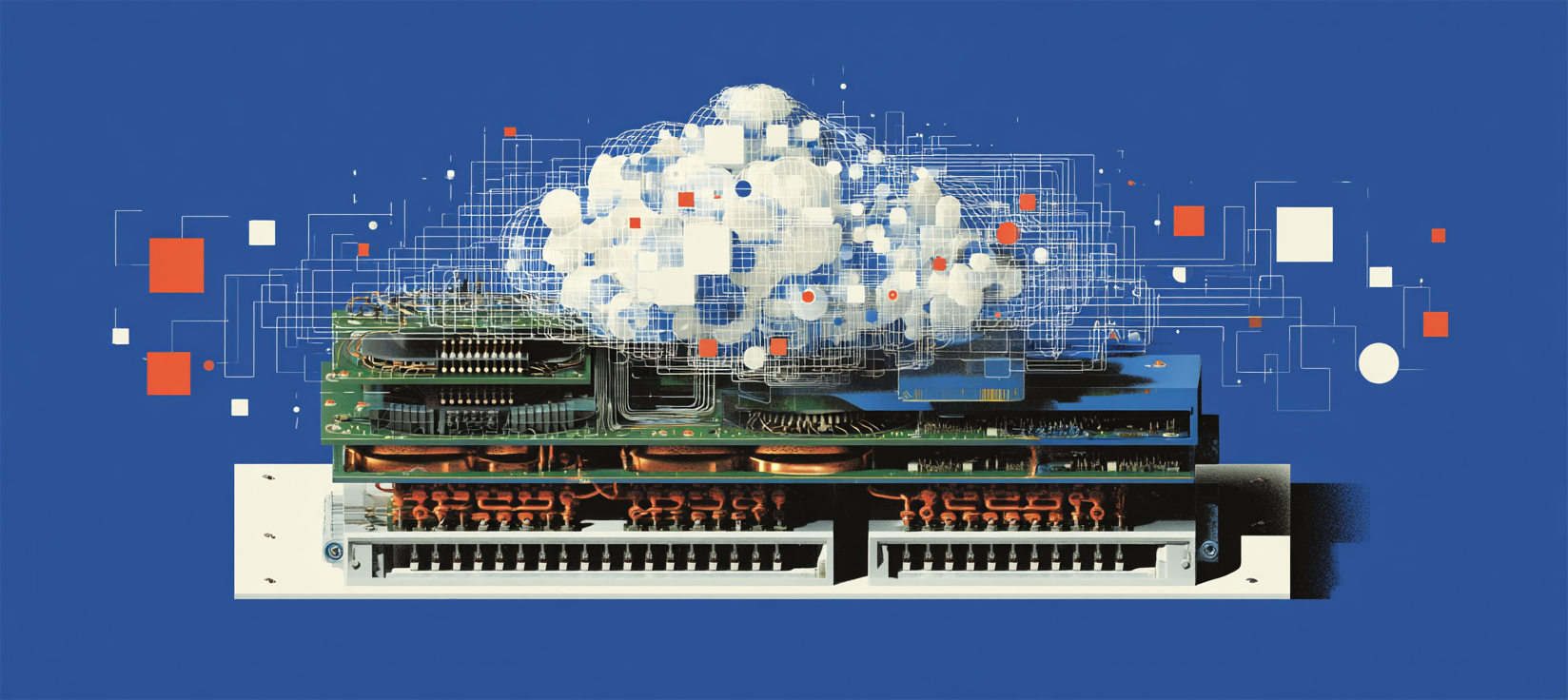
Microsoft's framework consolidation reveals a market inflection: orchestration patterns are commoditizing while execution infrastructure—the unglamorous work of making agents reliable at scale—captures defensible value.

Workday's acquisition spree reveals infrastructure land grab—control the connection layer where agents operate, control the enterprise software ecosystem itself.

Distributed protocols promise agent coordination across vendors, but the adversarial web makes cross-system failures nearly impossible to debug.

Centralized tracking sees agents running but misses why web automation fails quietly—authentication breaks, data goes stale, decisions suffer.

Finance teams are greenlighting automation projects they rejected 18 months ago—same workflows, but infrastructure costs dropped enough to flip the economic equation entirely.

Microsoft positioned itself as the mandatory gateway for enterprise agents—not competing with vendors, but controlling the infrastructure layer they all must flow through.

MCP's stateless design excels with cooperative systems but reveals architectural tensions when web environments actively resist automation at scale.

Rapid ecosystem growth proves MCP's architecture elegantly solves cooperative data source integration—validation through production adoption, not hype.

Vendor pricing chaos exposes what's genuinely expensive when web agents run continuously—authentication complexity, session management, error recovery patterns that compound at scale.

Salesforce's $8B acquisition spree reveals where agent defensibility actually lives: not reasoning capabilities, but operational infrastructure that makes automation trustworthy at enterprise scale.
Horizontal frameworks absorb experimentation risk while vertical platforms wait, watching which patterns prove out before integrating them selectively.
ServiceNow's agent wins come from workflow ownership, not technical superiority—each deployment deepens platform lock-in through operational dependencies.

Web automation's composability promise inverts at scale—reasoning layers swap easily, but execution infrastructure handling adversarial sites requires operational depth that resists loose coupling.
When agents replace seats, the real test isn't whether they work—it's whether you can prove they worked well enough to charge for outcomes instead of licenses.
We're building elaborate systems to make agents look human because the web resists programs—managing architectural tension, not resolving it.
Browser automation crosses from feature to funded category, revealing where agent complexity actually lives and what becomes infrastructure next.

Organizations are deploying AI agents faster than they can build the governance infrastructure to manage them safely—and that gap is about to become the constraint that determines who scales and who stalls.
AWS built agents that run for eight hours, but nobody's figured out what to do with them yet—revealing the gap between infrastructure capability and organizational readiness to trust autonomous execution at scale.