

On my hardest days as a programmer, what I ended up knowing was which four approaches had failed. None of it went into the file.
This was thirty-odd years ago, writing production code long before I had any vocabulary for institutions, and what stayed with me is not the thing that shipped. It is a structure I threw away, the particular load it buckled under, and why. That knowledge governed my decisions quietly for the next two years. It existed in no file, and there was nothing in it to review. In a strict sense it was the only thing those days taught me.
A code review shows you one state of a system and then the next: lines gone, lines added, an honest and complete accounting. Complete, and perfectly silent on everything that was weighed and dropped. That silence has started to matter, because across an enormous amount of knowledge work the human being has moved from producing this record to reading it.
Here I should be careful. Everything we know about how review functions was learned when the party on the other side of the diff was a person who had deliberated. I am borrowing that literature, provisionally, to think about a case where nobody deliberated at all. It still rules something out. The lazy version of the worry holds that reviewers catch small errors while makers hold deep structure, and that is not what the work shows. Roughly three-quarters of the changes review produces in open-source projects concern maintainability rather than function: coupling, placement, which module a piece of logic belongs in. Edits that require carrying an entire design in your head. Review is not proofreading. Review reshapes.
What review seldom does is discuss the shape the thing might have had instead. Across seven Java projects, researchers isolated more than four thousand reviews whose changes measurably moved the software's architecture, then read by hand the seven hundred that moved it furthest. Architecture came up at all in 31 percent of them.
When reviewers did raise design, though, in a separate study of two large open-source projects, 73 percent of the time they put a specific alternative on the table. They were not locating a defect in the artifact in front of them. They were reconstructing the space of options from outside it.
And two-thirds of the design problems they surfaced traced back to the author's narrow view of the wider system. Read that from the other side and it describes the reviewer exactly. The leverage came from having built things somewhere else.
The faculty, then, is not absent from curation. It is scarce, expensive, and imported.
The same thing shows up at a very different desk. At the European Union's translation centre, translators work through machine-produced drafts, repairing omissions, contradictions, terminology; the centre's own guidance warns that fluent output can carry errors only a trained linguist will see. A 2024 study examined authentic professional translations from a development bank, an insurer and a sports body, some written from scratch and some edited from machine drafts. The raw output used 22 to 26 percent narrower vocabulary than the human translations. Editing brought most of that range back. In two of the three collections it stayed about 8 percent narrower, with sentence structure still hugging the source.
The authors are properly cautious. Different source texts, and nothing here measures whether the translators' judgment changed. What it measures is the language that came out the other end. Editors restored variety, though not to the level people reach when the page starts empty.
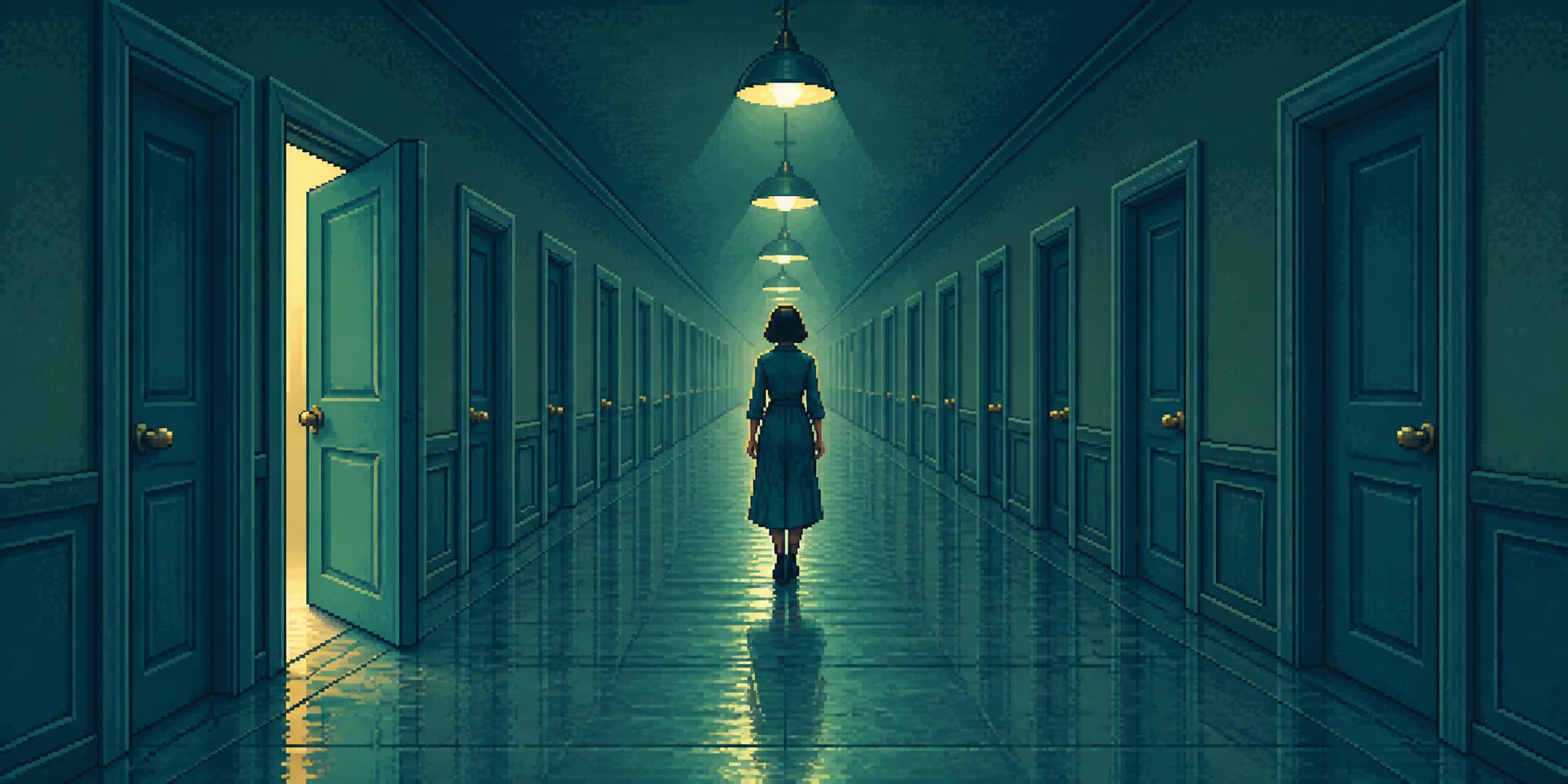
Which tells you something about how curation fails. Nothing is wrong with the line. The paragraph is competent. It has simply closed a door that nobody downstream is in a position to know was ever there.
The reviewers in those studies could see the door because they had spent years being the person who got it wrong four times before lunch. That is where their alternatives came from. What I cannot tell you is what the next reviewer brings: the one who has only ever received finished drafts, with no failed afternoons of her own to import.