Foundations

Foundations
Consequence-Bounded Autonomy


Been thinking about how every agent conversation I have circles back to capability questions—model accuracy, task completion rates, benchmark scores. But the teams actually running these systems at scale? They're asking completely different questions. Mainly: what breaks if this screws up?
What's interesting is how the autonomy decisions map to consequence tolerance, not technical readiness. You see the same pattern across different deployments—the framework isn't about climbing some maturity ladder, it's about matching autonomy to the specific mess you're willing to handle when things go sideways. The forecast matters less than knowing what storm you're prepared for.
Consequence-Bounded Autonomy
Been thinking about how every agent conversation I have circles back to capability questions—model accuracy, task completion rates, benchmark scores. But the teams actually running these systems at scale? They're asking completely different questions. Mainly: what breaks if this screws up?
What's interesting is how the autonomy decisions map to consequence tolerance, not technical readiness. You see the same pattern across different deployments—the framework isn't about climbing some maturity ladder, it's about matching autonomy to the specific mess you're willing to handle when things go sideways. The forecast matters less than knowing what storm you're prepared for.
When Shopping Carts Became Identity

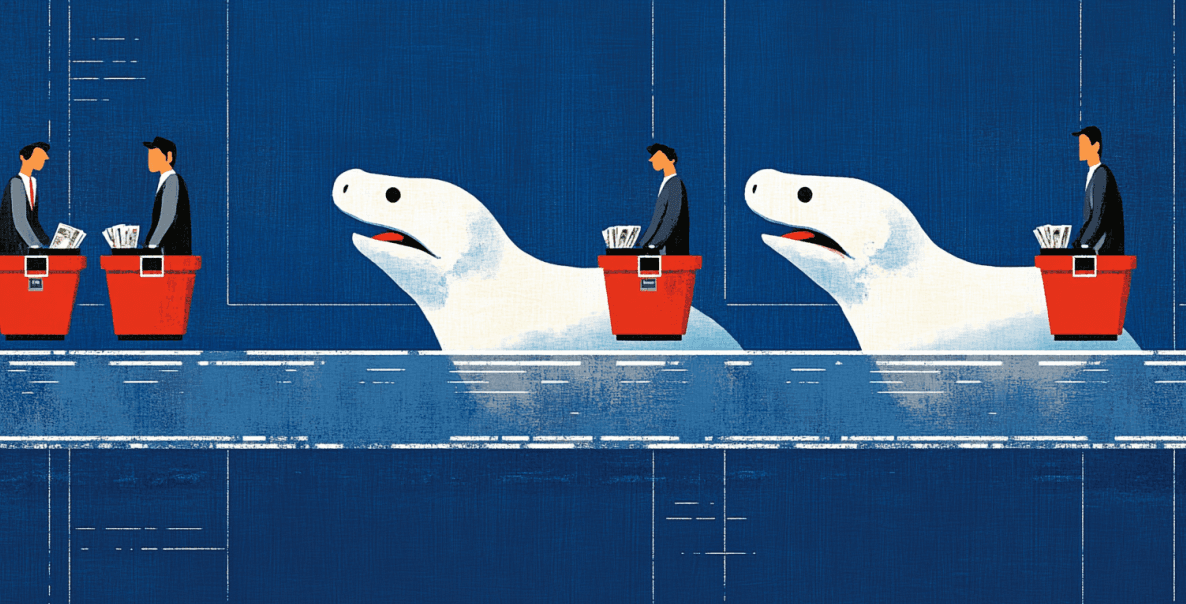
Been thinking about why authentication breaks so predictably at scale. Years of watching production login flows, and there's this pattern where the complexity isn't in the code—it's in managing state that lives in two places at once. Browser thinks you're logged in, server disagrees, user sees an error that looks like a bug. Turns out a 1994 shopping cart decision is still dictating how that works.
The forecast here: browsers are deprecating third-party cookies, which means enterprises are rebuilding authentication infrastructure while keeping millions of sessions alive. Not a clean cutover. Both systems running simultaneously, hoping nothing breaks mid-flight. Classic case of infrastructure built for one purpose getting stretched way past its design constraints.
When Shopping Carts Became Identity
Been thinking about why authentication breaks so predictably at scale. Years of watching production login flows, and there's this pattern where the complexity isn't in the code—it's in managing state that lives in two places at once. Browser thinks you're logged in, server disagrees, user sees an error that looks like a bug. Turns out a 1994 shopping cart decision is still dictating how that works.
The forecast here: browsers are deprecating third-party cookies, which means enterprises are rebuilding authentication infrastructure while keeping millions of sessions alive. Not a clean cutover. Both systems running simultaneously, hoping nothing breaks mid-flight. Classic case of infrastructure built for one purpose getting stretched way past its design constraints.
Pattern Recognition from the Field

Every major AI lab just announced a "reasoning" model. OpenAI's o1. Anthropic's extended thinking. Google's Gemini thinking mode. The pitch is identical: these models think longer, reason deeper, solve harder problems.
Then you actually use them.
OpenAI claimed o1 performs at PhD level on physics and math. Users found it failing basic logic puzzles within days. Anthropic shows Claude's thinking process, which often reveals circular reasoning dressed up as deliberation. Google's announcement was heavy on promise, light on specifics.
The pattern is clear. Labs are conflating longer inference time with better reasoning. Spending more tokens to think doesn't automatically produce better outcomes. It's like assuming someone who talks longer is automatically smarter.
This matters because enterprises are making architecture decisions based on these claims. They're building systems that assume reasoning capabilities that don't exist at scale yet.