

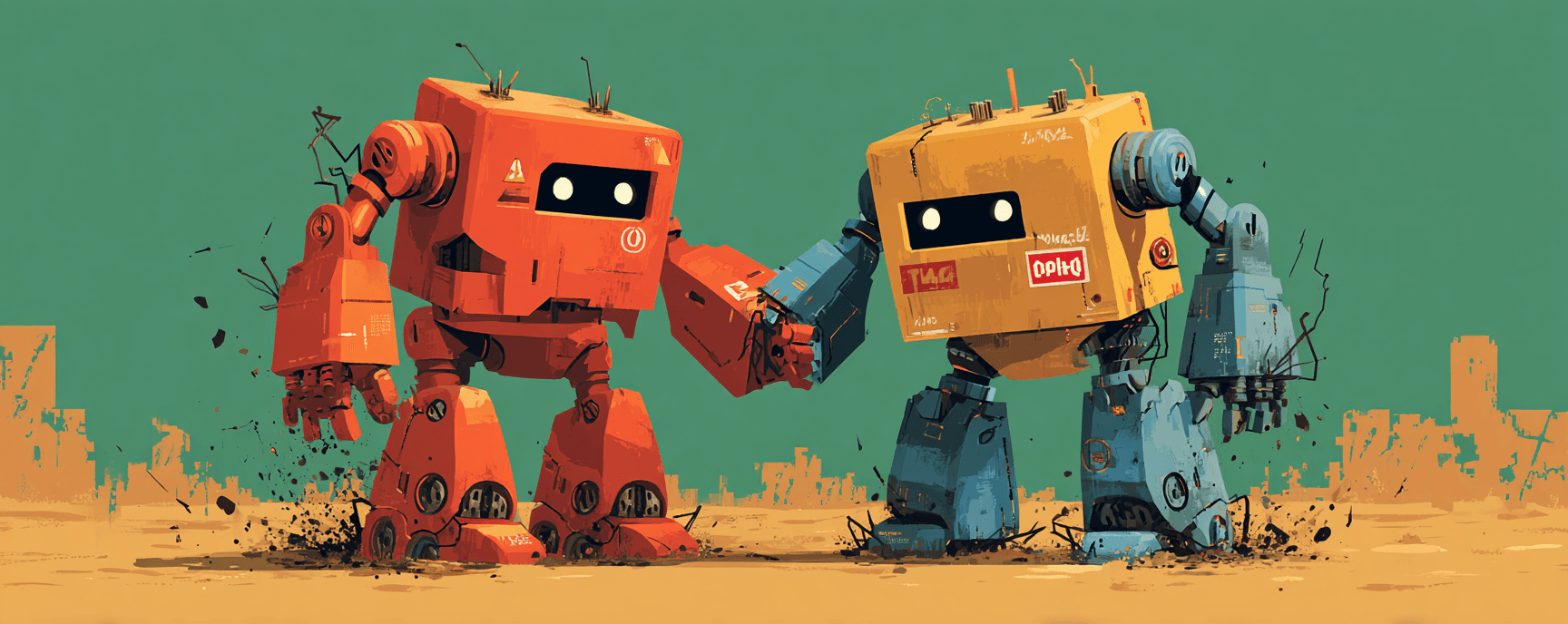
When Tyson Foods and Gordon Food Service deployed AI agents to manage supply chain operations, they discovered something that sounds almost quaint in retrospect: the agents couldn't talk to each other. Tyson's agent needed to share product data with Gordon's agent, but they were built on different frameworks. The only option was custom point-to-point integration. Exactly the kind of brittle solution that breaks when you're coordinating across dozens of suppliers.
Kate Blair, Director of Product Incubation at IBM Research, set out to solve this coordination problem when she led development of the Agent Communication Protocol (ACP) in early 2025. Her framing was deliberate:
"Our goal is to build the HTTP of agent communication."
Blair understood what made HTTP succeed: not technical sophistication, but simplicity anyone could implement. She designed ACP around RESTful HTTP endpoints that work with curl or Postman. No specialized SDKs required, no proprietary runtime. Enterprises needed infrastructure that integrated into existing stacks without demanding new toolchains.
The async-first architecture came from observing real workflows. Some agent tasks complete in milliseconds; others take hours. Blair built support for both patterns because production systems can't assume synchronous responses when an agent is processing thousands of web pages or waiting for human approval.
When Ecosystem Health Trumps Company Advantage
A month after IBM launched ACP, Google announced Agent2Agent (A2A) with backing from over 50 technology partners. Two protocols, same problem, different technical approaches.
Gartner had just reported a 1,445% surge in multiagent system inquiries, with "immature standards for agent communication" cited as a key adoption inhibitor. The market needed coordination infrastructure, but competing standards threatened to fragment the ecosystem.
Blair made a decision that most product leaders wouldn't: ACP merged with A2A under Linux Foundation governance in September 2025. "By bringing the assets and expertise behind ACP into A2A, we can build a single, more powerful standard for how AI agents communicate and collaborate," she explained. She joined the A2A Technical Steering Committee alongside representatives from Google, Microsoft, AWS, Cisco, Salesforce, ServiceNow, and SAP.
Blair understood that coordination challenges require ecosystem-level architecture. When enterprises deploy specialized agents for different functions (customer service, data analysis, fraud detection, inventory management), those agents need to discover each other's capabilities and hand off work reliably. That coordination layer can't be proprietary infrastructure controlled by a single vendor. Her emphasis on "open governance structure" from the start showed she was building for ecosystem adoption, not IBM advantage.
Why We're Watching This
At TinyFish, we orchestrate web agents at scale. The coordination question surfaces constantly. When a web agent extracts product data but needs a different agent to validate pricing across regions, the handoff either works reliably or requires custom integration that breaks when either agent updates. The protocol layer determines whether multi-agent workflows become composable infrastructure or a maintenance nightmare.
Blair's design decisions reflect what breaks in production:
- Agent Card system enables capability discovery without requiring agents to know about each other in advance (critical when you're coordinating dozens of specialized agents)
- Multimodal message support acknowledges that agents work with structured data, images, embeddings, and custom formats
- Async-first architecture handles both millisecond responses and hour-long workflows without forcing synchronous assumptions
With over 150 organizations now supporting A2A, the Linux Foundation governance prevents vendor lock-in while enabling coordinated protocol development. When agents can discover each other's capabilities and coordinate reliably, teams stop building custom integrations and start composing workflows from specialized agents.
The competitive intelligence analyst doesn't wait for engineering to connect the pricing agent to the inventory agent. The agents discover each other's capabilities and coordinate automatically.
Blair set out to build the HTTP of agent communication: infrastructure that enables coordination without demanding attention. With A2A now supported across the ecosystem, that vision is becoming operational reality.
Things to follow up on...
-
Google's A2A evolution: The protocol added gRPC support in version 0.3 based on customer feedback for high-performance scenarios, including a customer trialing A2A with a large fleet of mobile AI agents.
-
DeepLearning.AI course launch: The Linux Foundation partnered with DeepLearning.AI to create a short course on the Agent Communication Protocol starting in June 2025, making protocol education accessible to developers.
-
ServiceNow's AI Agent Fabric: ServiceNow implemented multi-agent communication infrastructure using A2A as the protocol layer, connecting ServiceNow, customer, and partner-built agents for greater flexibility in agentic AI deployments.
-
S&P Global Market Intelligence adoption: The financial data provider adopted A2A as their inter-agent communication protocol to enhance interoperability, scalability, and future-readiness across their agent ecosystem.