
Vision

Vision
Past Articles
October — Issue #50

Agent infrastructure creates precise new signals, but reading them demands interpretation, maintenance, and skepticism organizations are still learning to provide.

When agents replace routine work, organizations lose the byproduct intelligence that helped them discover problems they hadn't anticipated.
October — Issue #49

A case for formalizing the limbo state where commitments sit unresolved, before volume makes the informal version collapse.

How chargeback windows, malpractice clocks, and insurance reopening rules buckle when agent-generated commitments hit them at volume.

Agent tasks get marked complete, but without governed rules for reopening outcomes, organizations lose control of what their agents commit them to.
September — Issue #48

What institutions never receive when agents convert a person's circumstances into predefined fields, and who used to catch the mismatch.

How payment authorization frameworks quietly resolve the ambiguity between what a person intends and what an agent can be held to.

Translation theory offers agent designers a centuries-old vocabulary for the hardest problem in converting human intent into institutional input.
September — Issue #47

Agent intermediation is producing layered gatekeeping over access to buyers, concentrating channel power in the hands of whoever defines the selection criteria.

How platform scoring and agent evaluation push businesses to reorganize around machine-readable descriptions, until the specification starts shaping the offering itself.

Agent buyers don't browse and can't be persuaded. They compare against criteria — which moves competitive advantage somewhere most companies haven't been looking.
September — Issue #46

Cheap agent execution lets teams investigate questions they previously couldn't justify, shifting the constraint from affordability to navigation.

As agent-generated material proliferates, the scarce enterprise skill becomes assembling outputs for specific audiences and decisions.

Oversight has become the only frame organizations have for human-agent collaboration. The more interesting shift is humans doing work that wasn't previously possible at all.
September — Issue #45

Professionals are improvising oversight routines for AI output faster than organizations can measure whether those routines hold.

How autonomous lab scientists spend their time specifying constraints, budgets, and search boundaries before the robots run anything.

Agent adoption is creating a demanding operational discipline that organizations keep mistaking for freed-up time that should go to strategy.
August — Issue #44

Organizations adopting AI summaries of contracts, logs, and reports are losing the institutional capacity to catch what the AI gets wrong.

Blind users developed sophisticated verification practices for AI descriptions they cannot check—and still miss most confident errors.

When agents exist because users lack independent access, users also lack the ability to verify what agents report back.
August — Issue #43

Organizations consistently underresource exception handling, treating their most consequential remaining human work as residual cost.

Exception cases carry signals about shifting reality that dashboards cannot express, and automation may be closing that feedback channel.

When AI absorbs routine work, exceptions concentrate both cost and learning in the same place, creating a tension organizations haven't faced.
August — Issue #42

Organizations automate exceptions into rules without tracking the judgment spent to create them, depleting a resource nobody accounts for.

Why dollar value is the wrong axis for agent delegation when cancellation windows and information propagation determine real cost.

Agent risk has less to do with dollar amounts than with whether an action's consequences survive the undo button.
August — Issue #41

An agent can clear every authorization check and still choose badly for you. Fidelity has no instrument that survives a real transaction, and the buyer eats the difference.

Publishing structured data costs you nothing but effort. Getting invoked is somebody else's decision — and the leverage may sit with the thinnest registry, not the richest protocol.

Something is reading your site literally now. When declared data becomes a commitment, drifting feeds, drip pricing and value that only shows up in conversation all start to vanish from view.
August — Issue #40
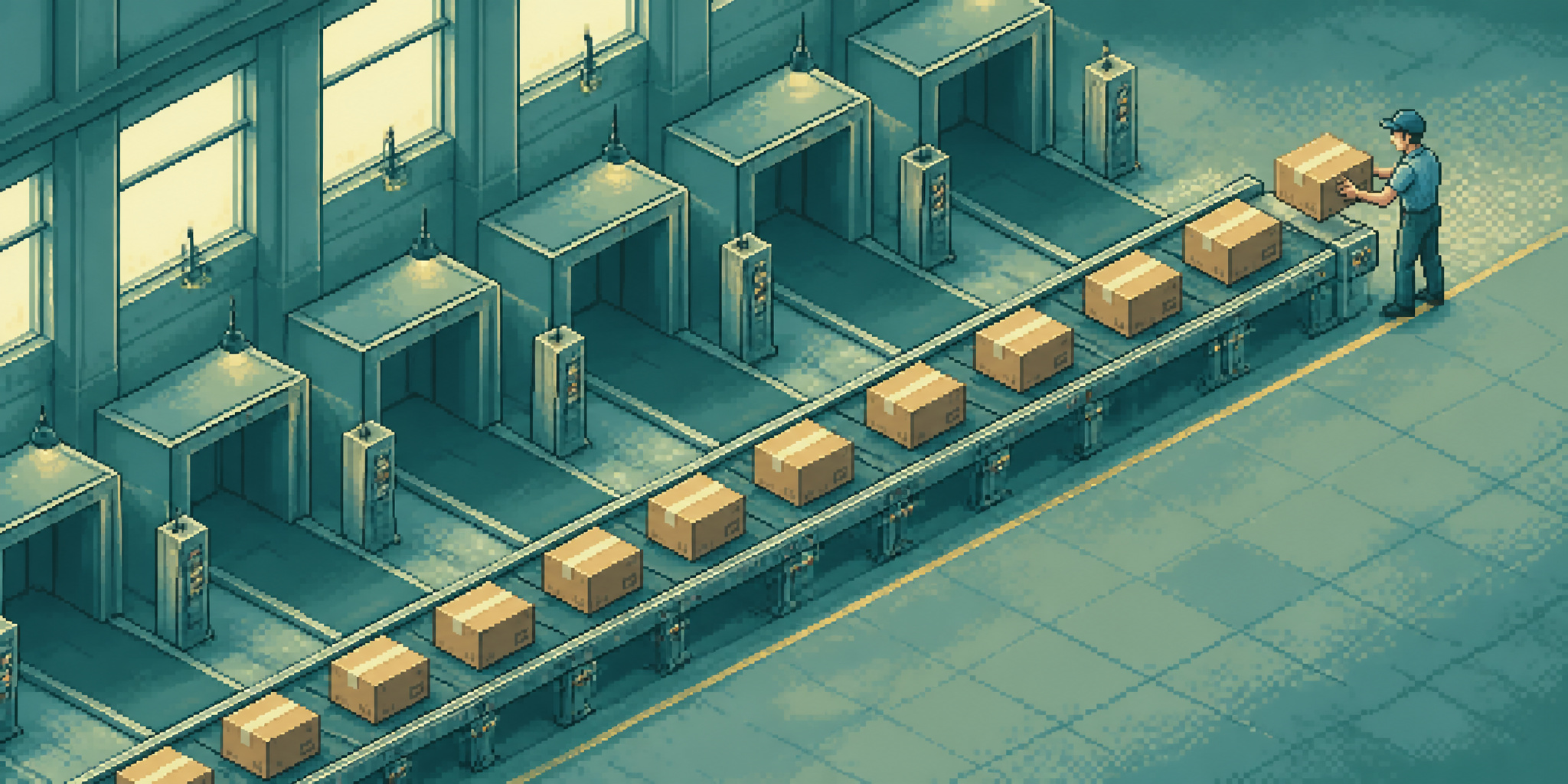
Organizations got human development free, as a byproduct of productive work. When agents remove the middle of the task, that subsidy quietly lapses and nothing on the dashboard says so.

Reviewing what a machine made will catch flaws. The judgment to imagine a better option appears to be imported from having built things yourself.

AI is eating the boring work that used to build engineers. The evidence points at the pipeline, not at the experts already in it.
July — Issue #39

Websites, payment networks, and content owners are building recognition infrastructure that will define agent access on their terms, before agents earn trust rather than after.

Agents act faster than organizations can challenge their output, degrading the review layer that makes clerk-model deployment survivable.

Agent speed turns familiar errors into cascades that outrun an organization's capacity to detect, absorb, or correct them. The binding constraint on adoption is not production but reception.
July — Issue #38

When agents handle routine work, human responsibility doesn't diminish. It concentrates into higher-stakes review that demands context, authority, and genuine organizational redesign. Without those, oversight becomes decorative.

Production agents across security, coding, and commerce keep converging on one architecture: scoped authority producing artifacts for human review, not autonomous action. The pattern works, until the interaction itself is the product.

AI agents aren't maturing toward peer-like collaboration. They're gaining institutional admissibility as clerks, and the price of admission is forcing organizations to make rules explicit that should have been explicit all along.
July — Issue #37

Continuous delegation management has no organizational precedent, and evidence shows why existing access control can't substitute for it.

Regulated industries already maintain compliance, QA, and exception-handling capabilities that map onto agent governance requirements in surprising ways.

Organizations that already codified delegation, authorization, and dispute recovery are absorbing agents fastest because they've already solved the hard problems.
July — Issue #36

Enterprise agents execute successfully but lack institutional standing, leaving organizations with green dashboards and no clean answers.

How chargebacks and disputes are forcing payment networks to build the accountability architecture agents need before anyone else.

Enterprises can use AI but can't scale agents because successful actions still lack the institutional legitimacy organizations need to own them.
June — Issue #35

Without costly consequences forcing delegation clarity, low-stakes domains keep agents stuck as fast interns producing unaccountable output.

Payments and compliance already built the scaffolding agents need, making regulated industries surprising frontrunners in agent deployment.

Agent adoption tracks accountability infrastructure, not model capability. The environments that can already answer who authorized what, within what limits, and where the records live are the ones reaching production first.
June — Issue #34

Meaningful AI-augmented work depends on specific design choices most organizations are making by accident, with compounding consequences.

Reviewing AI outputs builds real pattern recognition, but it may be a different thing than the domain expertise it resembles.

Organizations automating knowledge work are stripping out the friction where judgment forms, and most don't realize it until the expertise is gone.
June — Issue #33

What would an early warning system for degrading human oversight actually look like, and why is it so hard to build?

Aviation built concrete measurement infrastructure before its automation countermeasures. Enterprise AI skipped that step entirely.

Smooth AI assistance decouples confidence from accuracy at the individual level, then compounds into organizational blind spots that existing oversight cannot detect.
June — Issue #32

The few organizations redesigning work around agents share a method: decompose workflows first, then assign decision rights deliberately.

As agents absorb the routine tasks that built professional intuition, the pipeline for developing judgment quietly thins.

Enterprise AI agents are crossing from exciting to invisible, and the hardest questions only surface after the technology stops being the conversation.
June — Issue #31

AI makes work feel fluent, and humans read fluency as accuracy. Designing around this cognitive mechanism matters more than adding checkpoints.

The gap between AI piloting and autonomy is a fleeting window to build evaluation infrastructure before operational knowledge disappears.

Organizations lose the capacity to detect expertise erosion on the same timeline they lose the expertise itself, and the recursion is already underway.
May — Issue #30

Agents can talk to each other but cannot find each other, and history shows discovery layers rarely stay neutral without deliberate design.
When agents evaluate services at machine speed, competitive advantage migrates to invisible properties no marketing team has learned to measure.

When the buyer has no eyes or impulses, the web's trillion-dollar persuasion economy loses its audience and commerce rewires around machine legibility.
May — Issue #29

Automating entry-level work doesn't just thin the talent pipeline—it removes the institutional feedback loop organizations never knew they depended on.

Successful AI pilots quietly encode current workflows as permanent infrastructure, closing the window for organizational redesign before anyone notices.

Temporary infrastructure choices are calcifying into permanent architecture faster than governance can respond, and the window for intentional design is closing.
May — Issue #28
Shifting from doing work to overseeing AI replicates a familiar loss of craft identity that better training alone cannot resolve.

Workers' resistance to automating enjoyable tasks reveals where meaning lives in work and where agent deployment will meet friction.

Rising productivity plus falling engagement signals a work design problem enterprises must solve before agent orchestration roles are built by default.
May — Issue #27

When your customer is software, ads, loyalty programs, and storefronts lose their audience. What's left?

Agents can spend money but can't be sued. The accountability framework is still a draft while commerce rolls forward.

Agents are quietly gaining wallets, identities, and credit limits while nobody debates what economic participation means without wanting.
April — Issue #26
Breaking complex work into agent-sized pieces requires deep domain intuition that automation itself is quietly eroding.

Supervising agents that act autonomously demands a cognitive discipline we haven't named, trained for, or even fully recognized.
Assembly lines split craft from quality control a century ago—multi-agent AI is doing the same to knowledge work now.
April — Issue #25
The SEO playbook assumed browsers who wander. Agents that execute purchases break the analogy where it matters most.

From static text files to live queryable endpoints, websites are quietly rebuilding themselves to serve non-human visitors.

The web built infrastructure for visitors that read. Its new visitors spend.
April — Issue #24

Agents succeed by disappearing, but brands need visibility. The commercial paradox reshaping pricing, bundling, and loyalty.

When the most valuable agents are the ones nobody notices, oversight loses the friction it always depended on.
Agents are sliding from branded products to invisible infrastructure, but invisible judgment isn't invisible plumbing—and governance always arrives late.
April — Issue #23

PwC's generalist workforce model runs on deep specialists. What happens when nobody goes deep first?

Can reviewing AI output build the same expertise as years of hands-on failure? IBM's hiring surge tests that bet.

Organizations are quietly draining the reservoir that produces experienced practitioners, and they won't notice until it's empty.
March — Issue #22
Business units and security teams aren't misaligned on AI agents—their reward structures are.

When agents act without judgment, accountability lands on a role that doesn't exist yet.

Enterprises aren't just deploying agents without oversight—they're accidentally building a parallel workforce faster than anyone can govern it.
March — Issue #21

Agent commerce needs machine-readable trust, and whoever defines it becomes the infrastructure nobody can remove.

When AI agents replace human browsing, businesses that can't be parsed don't get penalized—they vanish entirely.

The commercial web is a persuasion machine disguised as an information network, and agents are calling the bluff.
March — Issue #20

Seventy percent of successful AI investment goes to people, not technology. The unglamorous work decides everything.

Agents are being absorbed into platforms like databases before them. The value is migrating to infrastructure.

Agents are becoming infrastructure at unprecedented speed, but organizations may be absorbing the technology faster than they understand it.
March — Issue #19

When every agent optimizes the same way, the web's weird, wonderful long tail quietly stops being discoverable at all.

AI shopping agents don't just filter products—their opaque criteria quietly harden into the operative definition of quality itself.

AI agents are encoding institutional taste at massive scale, and nobody involved in building them recognizes they're making aesthetic judgments.
March — Issue #18

Secondary interfaces always decay. What happens when humans prefer the agent's door because it wasn't designed against them?

Dark patterns can't survive serialization. When agents replace visual interfaces, manipulation loses its medium.

Building an honest interface for agents accidentally exposes what the human-facing web was designed to hide all along.
February — Issue #17
Professional judgment is splitting into pattern-matching that scales infinitely and accountability that never will, rewriting how firms exist.

Six months of embedded engineers signals the infrastructure gap between model capability and production reliability in high-stakes environments.