Foundations

Foundations
What Gets Lost When a Paper Becomes Callable
A research paper carries its findings, and it also carries the conditions under which those findings can be challenged: methods, assumptions, stated limitations. Paper2Agent, published in Nature this month, turns papers into callable servers you can point at your own data to run a paper's methods on it. The system keeps more than you might expect. But when findings move out of a container built for scrutiny and into one built for invocation, certain things get harder to see: version history, the seam between sourced results and the agent's own inference, and the surface a second party would push against.
What Gets Lost When a Paper Becomes Callable
A research paper carries its findings, and it also carries the conditions under which those findings can be challenged: methods, assumptions, stated limitations. Paper2Agent, published in Nature this month, turns papers into callable servers you can point at your own data to run a paper's methods on it. The system keeps more than you might expect. But when findings move out of a container built for scrutiny and into one built for invocation, certain things get harder to see: version history, the seam between sourced results and the agent's own inference, and the surface a second party would push against.
What a Paper Becomes When You Make It Callable

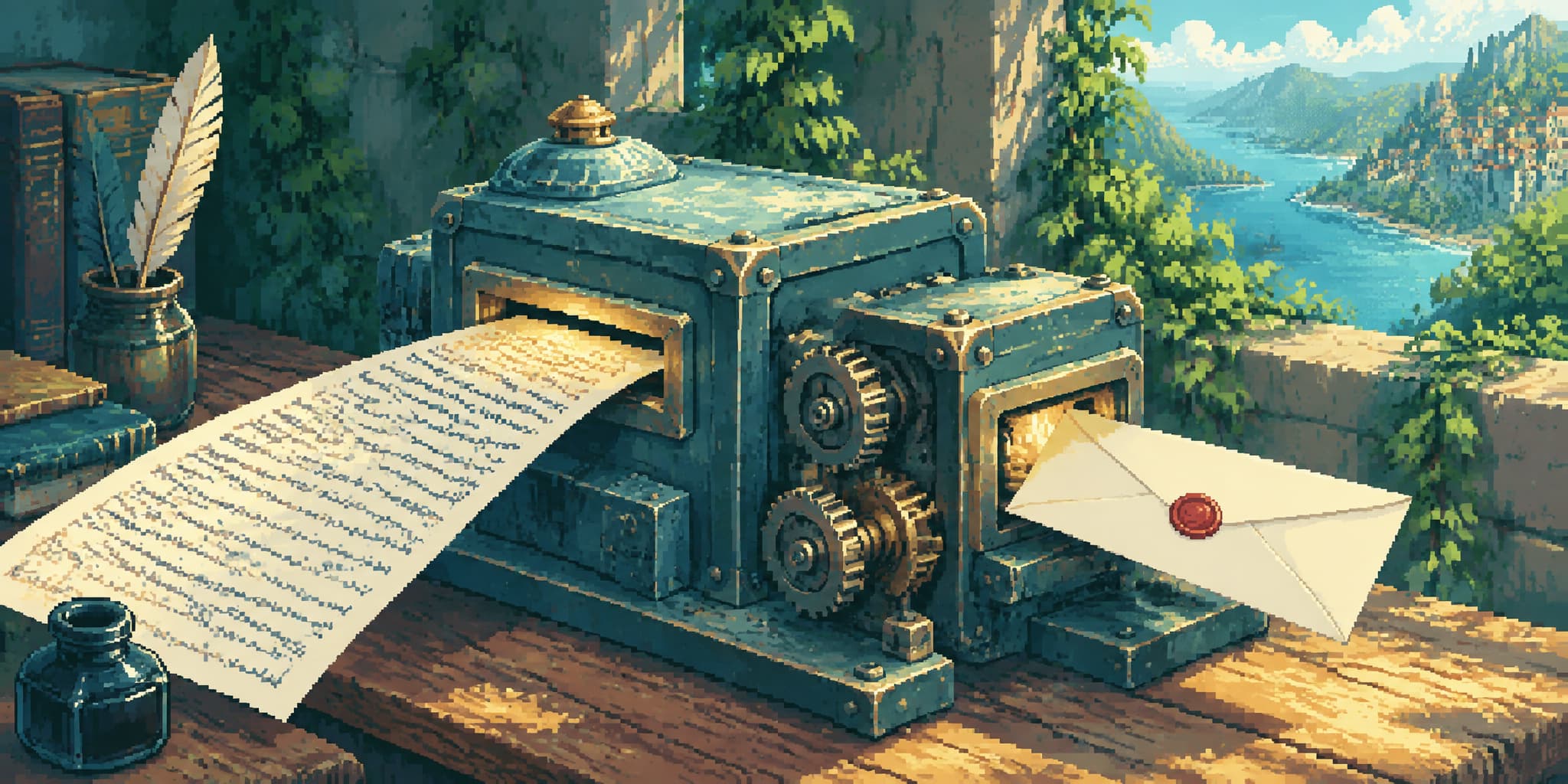
Paper2Agent, published in Nature this month, takes an academic paper together with its code repository and turns them into an MCP server whose methods you can call on new inputs. The conversion requires sorting the paper's contents into MCP's categories: tools, resources, prompts. A hard-coded threshold becomes a typed parameter. A workflow described in prose becomes a prompt template. The protocol forces a decision about what each piece of a method actually is, and those decisions show which parts of a paper sort cleanly into executable form and which resist it.
What a Paper Becomes When You Make It Callable
Paper2Agent, published in Nature this month, takes an academic paper together with its code repository and turns them into an MCP server whose methods you can call on new inputs. The conversion requires sorting the paper's contents into MCP's categories: tools, resources, prompts. A hard-coded threshold becomes a typed parameter. A workflow described in prose becomes a prompt template. The protocol forces a decision about what each piece of a method actually is, and those decisions show which parts of a paper sort cleanly into executable form and which resist it.
Extended Reading